
 Paul AMARA, Consultant, Center for Strategies for Security in the Sahel and Sahara, Centre4s.org
Following the disruption of their relations with the French and American militaries, Sahel countries have forged new partnerships to obtain satellite imagery. These tools—precious in the fight against terrorism and trafficking in drugs, weapons, gold, migrants, human beings, cigarettes, and fuel—are proliferating. As early as November 2023, Mali signed a memorandum of understanding with the Russian company Glavkomos, specialized in space activities. This agreement allowed it to improve internet, telecommunications, television, and territorial surveillance coverage. Other countries followed suit, displaying increasingly ambitious space goals. Thus, they are considering launching military observation satellites, either jointly or individually.
Military satellite surveillance enables the real-time detection of enemy movements over a radius of several hundred kilometers. It is also used for the continuous observation of high-risk areas, including hostile environments and those most inaccessible by land. It facilitates close monitoring of enemy equipment and reduces human risk by eliminating the need for dangerous ground reconnaissance missions. By crossing space, more or less discreetly and freely, satellites support military operations through observation, listening, and communication. Visualization through military satellite imagery helps locate terrorist camps and enable appropriate action. Thanks to these complex systems, Sahelian armies can develop rapid responses to jihadist threats.
By 2026, satellites will provide high-definition images, almost in real time, assisted by artificial intelligence (AI). The interpretation of these vast amounts of data will thus be carried out with minimal reliance on human intelligence, facilitating swift responses. On average, this type of surveillance satellite costs 300 million euros. Its maintenance and operation also remain expensive. Miniaturization and cluster launches can reduce this cost by up to 40%. Nevertheless, it represents a financial challenge for Sahel countries.
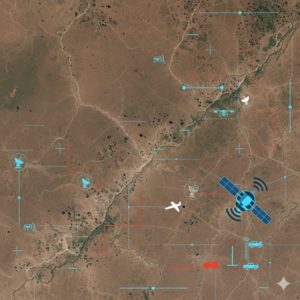
Many African countries are acquiring spy satellites.
By 2026, the number of spy satellites in orbit is estimated at 410, covering 93% of the planet1. In 2020, the following African countries had launched satellites: South Africa, Algeria, Angola, Egypt, Ethiopia, Ghana, Kenya, Morocco, Nigeria, and Sudan. Pioneers, through decades of strategic investments and international partnerships, Egypt and South Africa each have 13 satellites on orbit. Nigeria, with seven satellites, is a key player in West Africa. Algeria has six 2. Ghana developed GhanaSat-1. The Kingdom of Morocco is a leader in the field, having acquired the Mohammed VI A satellite, valued at $500 million. Officially, that satellite operates in orbit for telecommunications purposes.
Other African countries, especially those in the Sahel, must cooperate with these satellites, rely on international partners, or operate drones. Drones have significantly less surveillance and data processing capacity than satellites. However, these aerial platforms can also be used for attack. The three ESA countries signed a space cooperation agreement with their new strategic partner, Russia, in Bamako on September 23, 2024. This agreement was signed with Glavkosmos, a subsidiary of the Russian space agency, Roscosmos3. Two satellites are central to that initiative. One will be dedicated to telecommunications and promises improved internet coverage as well as enhanced radio and television broadcasting. The second will be dedicated to Earth observation. Thanks to its high-resolution imaging capabilities, it should be of great help in border surveillance and of prevention of insurgency risks.
In January 2026, specifically, Russia and Burkina Faso began considering the construction of a communications satellite intended to accelerate Burkina Faso’s digital transformation: paving the way for connectivity, mapping, and early warning services. Designed to cover the Sahel region, the satellite will also aim securing government communications and strengthening network resilience during crises. Alongside this Sahel-Russian cooperation, Niger has begun collaborating with China to acquire satellite imagery. It is also cooperating with Italy, which is deploying information gathering, surveillance and reconnaissance units. This assistance is provided through the Italian Support Mission to the Republic of Niger (MISIN), comprising 350 to 400 troops. The Italian Parliament authorized it in 2018 to enhance Niger’s capacity to combat various forms of trafficking and threats to its security.
Terrorist attack on Hamani-Diori International Airport, Niamey, on the night of January 28-29, 2026, revealed that this highly sensitive site is under satellite surveillance by the American company Ventor Tech, which specializes in space-based information.
In Libya, Russian aircraft and satellites are monitoring ISIS positions in the east and along its border with Egypt6. In Mauritania, at the end of September 2024, the Ministry of Digital Transformation and Administrative Modernization announced the launch of a strategic project to create a national space program for Nano satellites7. The country aims at establishing a sovereign space system for security, surveillance, and control, as well as extending digital coverage to the entire national territory. In Sudan, satellite imagery played a crucial role in highlighting the atrocities committed in El-Facher8. These images were the only way to monitor situations in inaccessible areas with a failing communication network.
Overflights of Sahelian countries.
The lack of technological infrastructure in West Africa, and the Sahel in particular, allows foreign powers to freely overfly their territories. On Christmas Day 2025, at the initiative of the US government, bombings targeting Islamic State (ISIS) fighters took place in Sokoto State, Nigeria. The official reason was that Nigeria was allowing genocide and the persecution of Christians to continue. Following discussions between the two countries, a month later it was decided that Nigerian aircraft would henceforth conduct airstrikes themselves, based on images and data collected by American surveillance equipment. Furthermore, Nigeria would choose the targets, and its military would receive drones, helicopters, aerial platforms, and the necessary spare parts and maintenance systems9 from the United States. This equipment had been ordered by Nigeria over the past five years but had not yet been delivered. Nigeria is waging its war against jihadists under American aerial surveillance, thus it is without data concerning it and therefore strategically dependent.
Donald Trump threatened Nigeria with further strikes if any more Christians were killed. General John Brennan of U.S. Africa Command (AFRICOM) stated in an interview on the sidelines of talks between Washington and Abuja10 that the Pentagon maintains military cooperation with the three ESA countries. He added that the United States continues to share intelligence with Nigeria because changing security partnerships is sometimes risky.
Following an ambush attributed to the Islamic State in the Greater Sahara (ISG) in Tillabéri, western Niger, which resulted in the deaths of 135 members of the National Guard, Niger made a major decision. In early May 2025, it terminated its intelligence cooperation agreements with Russia and Turkey, citing the operational shortcomings of the equipment and technicians provided by the two partners in the field of digital intelligence11. As a replacement, Niger contracted a Moroccan company specializing in the same area. However, that agreement was abruptly terminated after the revelation of an indirect link to a French private contractor. Given the disruption with Paris since the coup in July 2023, that is hard to accept. Niger immediately ordered the dismantling of the operation, and now the United States is back, offering its services.
1.Philip Archer Publié: 21 juin 2025 Catégorie: Politique Surveillance militaire par satellite, satellites espions, reconnaissance satellite militaire, applications stratégiques satellite
- Afrique : voici les pays africains qui ont le plus de satellites
04/01/2025 par Amos Traoré https://lanouvelletribune.info/2025/01/afrique-voici-les-pays-africains-qui-ont-le-plus-de-satellites/
3. L’Afrique, un continent tourné vers le ciel et la course aux satellites, Posté le 7 février 2020 par Chaymaa Deb dans Matériaux
- Publié le 25 septembre 2024 à 17:26 – Maj 25 septembre 2024 à 19:15 Au Sahel, la guerre prend la route du ciel et de l’espace – l’Opinion Pascal Airault
- 28 janvier 2026 La Russie Et Le Burkina Faso Envisagent Un Satellite De Télécommunications Pour L’Alliance Des États Du Sahel
- satellites de reconnaissance militaire en libye – Recherche
7 ; 30/09/2025 La Mauritanie se prépare à créer un programme spatial national pour les nanosatellites | MADAR
- Au Soudan, des images satellite pour témoigner des massacres d’El-Facher | Le Devoir, 26 octobre 2025
- 23/01/2026 par Gildas Amoussou Nigeria : les USA vont livrer le matériel militaire commandé au cours des cinq dernières années – La Nouvelle Tribune
- FRANCE 24, lun. 26 janvier 2026 à 8:01 AM UTC+1 Les États-Unis renforcent leur coopération avec le Nigeria contre le groupe État islamique – Yahoo Actualités France
- ISI : Renseignement militaire : le Niger met fin à sa coopération avec la Russie