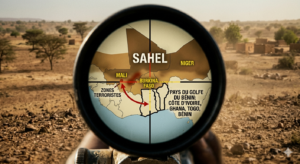
Sudan: a conflict worsened from outside
 Limam NADAWA, Centre for Strategy for Security in the Sahel-Sahara, Centre4s.org
In September 1989, when General Omar Hassan al-Bashir seized power, Sudan was the third-largest country in Africa—after Algeria and the Democratic Republic of the Congo—with an area of 1,879,358 km². He steered his country down an “Islamist path” under the guidance of a Muslim Brotherhood leader, Hassan Al-Turabi. Finally, various conflicts eventually led to the secession of South Sudan in July 2011. Seven years later, protests demanding greater democracy and protesting the high cost of living triggered Al-Bashir’s overthrow by the military. An interim government was then established, led by Abdalla Hamdok, an economist and former senior United Nations official. However, military officers – fearing the loss of their privileges and dreading accountability for crimes committed during past conflicts -secured key positions within this government. They ended the transition by orchestrating another coup d’état in October 2021. Two officers came to dominate the power: General Abdel Fattah Al-Burhan and his deputy, General Mohamed Hamdan Dagalo, known as Hemedti. Their rivalry led to the current conflict. From that perspective, it is doubtful whether the civilian population – longing for a return to constitutional rule and suffering as victims of their bare atrocities – supports either side. Moreover, the United States has accused both camps of genocide.
 Liman NADAWA, Consultant, Center for Security Strategies in the Sahel and Sahara, Center4s.org
 Ahmedou Ould Abdallah, president centre4s
 Limam NADAWA, Centre des stratégies pour la sécurité du Sahel Sahara, Centre4s.org