
Sahel: against foreign troupes ?
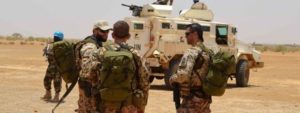 In Burkina Faso, Mali and Niger, civil society organizations (CSOs), opposition parties, as well as workers and students’ unions are increasingly protesting against foreign forces presence in their countries. These attitudes stem from several motivations: respect of the Independence spirit that had led the new States, such as Upper Volta (now Burkina Faso) and Mali, to demand the departure of the French army from their territory and also the relative weak results of said foreign armies in their support to the fight against terrorism.
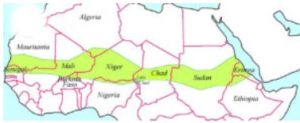 A number of the Sahel governments have their eyes fixed on the rearview mirror, wanting to know nothing of the present and even less of the future. Populist discourse with a haunting refrain – » it is the others’ fault » is recurrently condemning the international community action though not offering an alternative. A demagogy that does not serve the Sahel countries or the regimes themselves. A fresher and freed look is called for.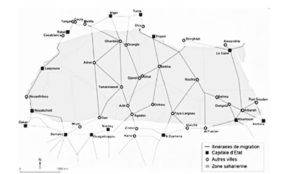
 Aspirations for peace tend to be depicted negatively, as the absence of conflict. In many societies, peace is experienced as the order that follows the end of war, often called negative peace. Seen through this prism, peace is rarely studied independently or measured directly without the long shadow of its ubiquitous companion, conflict. It also leaves little space for peace to be pursued as a national meta-policy—as in Costa Rica with its national vision for peace, or Ethiopia with its newly-established Ministry for Peace.
 A Security Council delegation has arrived this weekend to the Sahel. It will visit Mali and Burkina Faso. In view of the long lasting Mali crisis and the worrying developments in Burkina Faso, that is the right focus. Then, what after?