

The Sahel Sahara at Nouakchott.
 General observations.
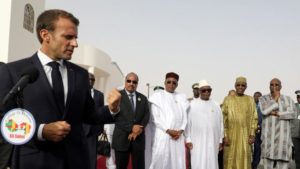
On February 24 and 25, the G 5 Sahel Summit and the Alliance for the Sahel will be held in Nouakchott, Mauritania. In that context, a reminder and observations may be needed.
A number of misunderstandings – as well as false information – muddle the Sahel Sahara crisis. That contributes to worsening the crisis and to delaying its resolution. To help understand it, clarification is needed.
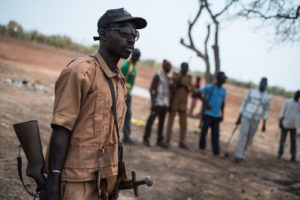
 In the Sahel, where an armed conflict has been ongoing since 2012, today, the greatest risk is »the war of each against all ». The widespread civil war situation evoked by Thomas Hobbes in the 17th century looms over the Sahel and already exists in Libya.
 The December 10, 2019 terrorists’ assault on Inatès, an advanced military post on Niger border with Mali, has caused the loss of seventy-one (71) soldiers. The terrible toll provoked anger in this country. Among the reactions, those of important actors of the country political life voicing their doubts on the usefulness of the foreign military bases installed in the Sahel. In particular, they questioned the armed forces of the host countries lack of information on the jihadists’ whereabouts at critical times.
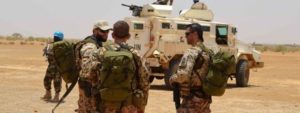 In Burkina Faso, Mali and Niger, civil society organizations (CSOs), opposition parties, as well as workers and students’ unions are increasingly protesting against foreign forces presence in their countries. These attitudes stem from several motivations: respect of the Independence spirit that had led the new States, such as Upper Volta (now Burkina Faso) and Mali, to demand the departure of the French army from their territory and also the relative weak results of said foreign armies in their support to the fight against terrorism.